Yarda
Insights
Why FX Risk Behaves Differently in Latin America
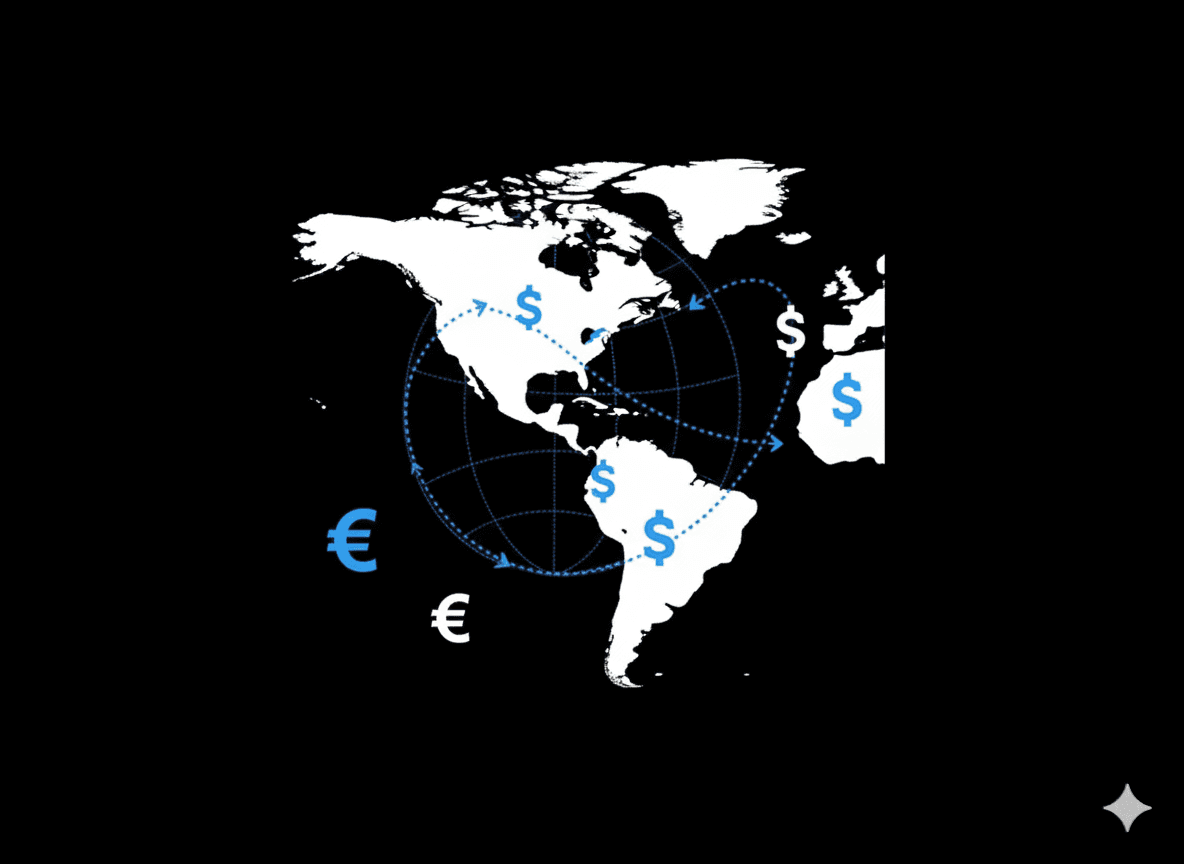
In Latin America, exchange rates tend to move faster and more violently than in developed markets. That reality materially changes how CFOs should think about pricing, costs, and risk management.
Why does this happen?
There are three practical drivers.
Commodity exposure feeds directly into currencies
Many Latin American economies are structurally linked to energy, metals, and agricultural products.
When commodity prices move, currencies often follow. Commodities are inherently volatile, and those price swings translate into currency volatility. Additionally, Latin American economies are generally less diversified than developed markets, strengthening the commodity-FX connection.
As a rule of thumb:
The Mexican and Colombian peso often correlate with oil
The Brazilian real is closely linked to soybeans
The Chilean peso is strongly tied to copper
For companies with USD-denominated inputs or revenues, this linkage creates direct P&L volatility.
Capital flows react quickly to global rates
Many Latin American economies borrow in USD and rely more heavily on foreign capital than countries with deep local capital markets.
This means Latin American FX is not just exposed to domestic policy — it is exposed to global liquidity cycles.
As a rule of thumb, when U.S. rates rise, capital flows back to the United States as investors seek higher yield with lower perceived risk. Importantly, investors do not wait for the full hiking cycle to materialize. They anticipate it. As a result, these capital flows are often large, fast, and unrelated to local fundamentals.
For businesses, this means FX volatility that is exogenous and difficult to predict — yet immediately reflected in costs, debt servicing, and cash flows.
Political and regulatory uncertainty amplifies moves
Political uncertainty tends to be structurally higher across the region.
Election cycles often trigger volatility
Fiscal policy credibility matters enormously
Sudden regulatory shifts affect capital flows
Even though many Latin American central banks are now credible and independent, historical inflation memory still influences:
Risk premia
Dollarization behavior
Hedging demand
In developed markets, institutions tend to dampen shocks. In emerging markets, FX often absorbs them.
What does this mean for your company?
In practice, the exchange rate can move 10–15% within a few months. If a meaningful portion of your cost base is denominated in dollars, that move can:
Compress margins materially
Turn a profitable contract into a loss
Undermine growth plans that rely on internal cash generation
In volatile environments, improvising FX decisions is expensive.
At Yarda, we believe that in Latin America, FX risk management is not optional. It is a structural requirement. Without a clear FX framework, volatility does not just increase risk — it erodes decision quality.